Don’t call it a comeback…tonight marks the kickoff of the 2011 NFL season and the BTPC could not be happier. That means it’s time for us to reconvene our prognostication panel and get back to making our “Guaranteed 50% Accurate” picks. Seriously…we’re like clock-work. Last year’s record came in at a 50.54% rate for the season, 63.63% for the playoffs. What can we say, we step it up when the games mean more. Our career prognostication efforts on this blog come in at a whopping 50.86%...suck on that Vegas. All this explains how we came up with our slogan “BTPC picks…as good as a coin flip, guaranteed.”
Saints v. PACKERS (-4)
Tonight’s Kickoff game features the Saints traveling up to Wisconsin to help the Packers celebrate adding yet another championship to Title Town. With Peyton Manning looking like he might not play this season (or perhaps ever again), this game features, arguably, 2 of the top 3 quarterbacks in the league right now if you figure Rodgers and Brees fall behind Brady. Personally, we’d put the top-5 right now as Brady, Rodgers, Rivers, Brees and have a tie for 5 with Romo & Vick. Vick’s numbers last season were sick, but he has to replicate that performance before we truly buy that he should be higher.
Having said that, it’s obvious that Drew Brees and his teammates took their poor performance last season personally. The Saints players were some of the most organized about setting up their own private team workouts during the lockout. In fact, we read a report that claimed Brees and some of the other vets actually secured insurance for the rookies, so they could come work out with the team and have peace of mind should an injury occur. That’s pretty damn impressive. You can’t help but think that kind of leadership and dedication is going to have the Saints ready to play tonight.
We are really torn about this pick. We loved the Pack in last year’s playoffs. When you look at what this Packers team did last season with a slew of injuries, it’s hard not to believe they’re going to be significantly better with a healthy team. However, the line actually opened at 5.5 and has now dropped 1.5 points. That’s a pretty big drop, which would seem to indicate smart money was jumping all over the Saints and Vegas has been dropping the spread to try to even out their risk. While that’s pretty important, does it really mean that much in the opening game of the season? In other words, who really knows how good either of these teams are before they strap it on and kick it off?
We like the Pack to win outright. We like the Saints with the opening line of getting 5.5. But the question is do we like them only getting 4? What the hell…
BTPC pick: Saints getting 4.
Last Pick, Super Bowl XLV: 1-0
2010 Playoff Record: 7-4 Upset Special: 2-0
2010 Season Record (including playoffs): 140-128-9
Career to date: 266-240-17
There was a Letter to the Editor in today's Post & Courier, which would appear to be written in response to our friend Diedreich von Lehe's Supreme Court decision in the Mt. Pleasant video camera case (Town of Mt. Pleasant v. Roberts). The title of the letter? Get Tough on DUI.
According to a recent Post and Courier article, alcohol is involved in most South Carolina traffic deaths. In fact, we rank 49th among states as regards alcohol-related deaths. What are we doing about these disturbing figures? Our politicians (lots of whom are lawyers) are actually making it harder to catch and convict drunk drivers.
In the meantime, we have a scary situation where South Carolina families are sharing the roads with an increasing number of drunk drivers. How many families have to suffer a needless loss due to a drunk driver before we take this problem seriously?
Pretty scary stuff, huh? What, pray tell, are we to do? We can start by being honest about the actual situation. Is driving while under the influence a serious problem that can lead to tragic consequences? Absolutely. But if one looks objectively at the issue, you can see that there's some puffing going on. First, NHTSA and the SC DPS both have adopted a definition of "alcohol related accident" which is incredibly overbroad when it comes to alcohol's role. Under their definition, an "alcohol related accident" is one in which any person involved (driver, passenger, pedestrian) has a detectable amount of alcohol. A "detectable amount" means .01 or above. So just how slanted does that make the statistics that result in SC being the 49th state in terms of preventing alcohol related accidents? Why would the state rig the numbers like that? That's easy: money. As in grant money from the G and state funding considerations come budget time.
A fellow criminal attorney friend of ours (Hattip McCulloch) has been gathering the State's statistics on accidents and the actual numbers reveal that maybe the fears of a DUI-caused accident epidemic are not supported by the data. For instance, the official SC DPS stats we've seen for total accidents show that DUI related accidents (323) in Horry County in 2009 comprised 4.4% of total accidents (7,360). For 2010, the number of DUI-related accidents (339) was just 4.6% of the total accidents (7,427). (The DUI-related numbers were obtained from this SunNews article).
Now, those numbers are not meant to make light of the serious consequences involved for society as a whole when someone gets behind the wheel while too impaired to operate a vehicle. But what they do show is that maybe the outcry by folks like Mr. Sadler who wrote the letter quoted from above need to seperate fact from fiction. The VAST amount of traffic enforcement in this state is directed at DUIs. From Sober or Slammer, to The Heat is On, to Highways or Dieways, the state of South Carolina and the Federal Government have been funding the hell out of DUI enforcement. In making DUI enforcement a priority, we have also incentivized the enforcement of DUIs. In other words, cops make rank, get awards and recognition and departments get equipment based on their DUI numbers. When you incentivize conduct, you corrupt the process. Just ask Enron. Folks like Mr. Sadler need to understand not only that fact, but that it also should not be EASY to convict someone of this or any other crime.
There's really not much to say about this video the South Carolina Bar did to promote the Hot Tips 2011 seminar coming up on September 16, 2011 other than it's Genius. Pure. Unadulterated. Genius...
We already know that 2012 GOP Presidential candidate Michele Bachmann thinks her husband can help homosexuals "pray the gay away."
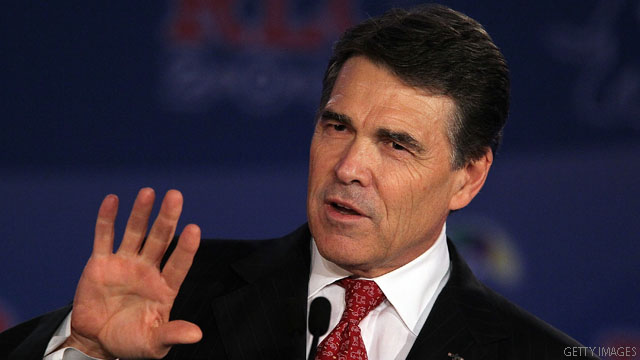
Now, we get a peek into Texas Republican Presidential candidate Rick Perry's solution to this "problem":
In “On My Honor,” Perry also punted on the exact origins of homosexuality. He
wrote that he is “no expert on the ‘nature versus nurture’ debate,” but that
gays should simply choose abstinence.
That's right you gays: don't have sex. "Talk to the hand" all you want, but that whole "pursuit of happiness" thing from the Declaration of Independence? Well...if sexual interaction between consenting adults is your idea of happiness, tough titty. You don't get to do it.
We've posted before about the shortcomings of eyewitness identifications. Basically, we know that false eyewitness identifications have played damning roles in the majority of wrongful convictions. And given how we have come to know these convictions are wrongful, due to DNA testing, we know that the second prong of the legal test used to weigh the credibility of eyewitness identifications is complete horseshit.
As we noted before:
The court set up a two-pronged analysis. First, was the eyewitness
identification unduly suggestive? Crap like roll-up IDs (driving a victim up to
a Defendant in handcuffs or vice-versa, single-person show-ups, single-person
photo IDs, improper photo arrays (all white, but one black person in lineup when
the suspect is alleged to be black) are pretty much disfavored automatically.
However, the Biggers two-pronged test says just because the procedure used for
the identification was unduly suggestive, it doesn't mean it's not admissible.
Courts must then move to the second prong of the Biggers test, which is to
consider the "totality of the circumstances." How does one do that? The court said you do that by considering the following factors: 1) the opportunity
of the witness to view the criminal at the time of the crime; 2) the witness’
degree of attention; 3) the accuracy of the witness’prior description of the
criminal; 4) the level of certainty demonstrated by the witness at the
confrontation; 5) the length of time between the crime and the confrontation.
Due to the biological nature of the DNA evidence that has led us to
uncover most wrongful convictions we know of, a large majority of these DNA
exonerations deal with cases involving sexual assault. In other words, in the
vast majority of these cases where we know mistaken eyewitness identification
has played a major role, the mistaken eyewitnesses have most likely: 1) been in
close proximity to the criminals; 2) experienced heightened degrees of
attention; and, 3) had ample opportunity to observe the criminals. Since these
cases resulted in convictions, we can assume that the degree of certainty with
which these eyewitnesses made their misidentifications was high. In short,
science has proven the second prong of Biggers and its consideration factors
obsolete.
So it is with great anticipation that we relay the United States Supreme Court is set to revisit the issue of eyewitness identification, some 34 years after their last look at the issue. How long ago was the last case of Manson v. Brathwaitedecided? 1977. If you want to know how long ago that was culturally for our country, read the first 8 words of the opinion: "Glover, a trained Negro undercover state police officer..." A "trained Negro undercover state police officer?" What a novelty!
Seriously, eyewitness identification is an area of the criminal justice system that must be revisited. As a recent NY Times article documented:
Every year, more than 75,000 eyewitnesses identify suspects in criminal investigations. Those identifications are wrong about a third of the time, a pile of studies suggest.
Of the first 250 DNA exonerations, 190 involved eyewitnesses who were wrong, as documented in “Convicting the Innocent,” a recent book by Brandon L. Garrett, a law professor at the University of Virginia.
Many of those witnesses were as certain as they were wrong. “There is absolutely no question in my mind,” said one. Another was “120 percent” sure. A third said, “That is one face I will never forget.” A fourth allowed for a glimmer of doubt: “This is the man, or it is his twin brother.”
In the past 30 years, More than 2,000 studies on the topic have been published in professional journals in the past 30 years. The problem is that the unreliability of eyewitness identifications tends to be exceeded only by the weight which juries give them. In Watkins v. Sowders, a 1981 case, Justice William J. Brennan, Jr. remarked in his dissent that "There is almost nothing more convincing than a live human being who takes the stand, points a finger at the defendant, and says, "That's the one."
Justice Brennan is right. Given the weight juries afford eyewitness identifications, it is more than past time for the Court to reconsider the gatekeeper role judges should play in admitting such testimony. As we argued to a judge a little more than a year ago who asked us if we were trying to argue to the court that eyewitness testimony should be looked at as de facto unreliable: "I'm not telling the court that...science is."
Right as we were graduating High School, 3 young boys were murdered in a wooded area of a West Memphis, Arkansas neighborhood. The wooded area was known to the kids of that neighborhood as Robin Hood Hills and the brutal nature of the crimes against the three young 8-year old boys sent the area into a panic.
The man in charge of the investigation was West Memphis Police Department Investigator Greg Gitchell. As the days dragged on into weeks and the weeks became almost a month, the failure to find the killers was wearing on the police. Almost three weeks after the bodies of the boys were found, Gitchell wrote a letter to the state crime lab, pleading for help in getting some information which would help them solve the case. The letter claimed that the cops needed information badly, that their hands were tied without it and that they felt they were "walking blind-folded through the case." Gitchell followed that letter up 2 days later with a letter to the district's deputy prosecutor (and the man who would wind up prosecuting the cases for the state), John Foglemann informing him of how "severely handicapped" they were without the information from the crime lab. In an unusual move, Gitchell's letter admitted that, unbeknownst to him at the time they did it, Foglemann and another prosecutor had already driven to the state crime lab in an effort to push things along.
Early on, Gitchell dropped what was really just a random comment with no support in the evidence: that the murders could have had something to do with a gang or cult. One person who seized on those comments was a county juvenile officer by the name of Jerry Driver. Driver was seen by the local cops as an "expert" on the occult. Where this idea that Driver was any kind of an expert came from is beyond us, seeing as how his professional career was not in law enforcement or academia, rather Driver had been a commercial airline pilot and had tried to open a housecleaning business that had failed. After that, he became the Chief County Juvie officer. When he heard about the murders, it was vindication for Driver. He had been telling people for months something bad was going to happen. And when it did, Driver knew who was responsible: Damien Echols.
Driver and his assistant, Steve Jones, seized on Echols and his friend Jason Baldwin (Baldwin is pictured to the left, Echols in the center. Jesse Misskelley, Jr. is on the right), who both men believed were starting or belonged to a satanic cult in the area. Echols had come to Driver's attention before when Damien and his girlfriend had gotten caught trying to run away. Echols' room was searched as part of that incident and Driver got a hold of some of Damien's "notebooks." Driver heard of some crazy-ass rumors that Damien and his girlfriend were gonna have a baby, then sacrifice it to Satan, and that was enough for Driver to personally escort Damien to a psychiatric hospital out of town.
Long story short, Driver got gravely worried about this kid, because he dressed all in black, said he was a Wiccan and just plain looked weird. But...take a look a Driver. How many teenage kids today would be classified as "weird" by a guy like Driver? Uh...how about all of them. Regardless, even with Echols locked up in a psych hospital, Driver and his disciple Jones continued to see Echols as a the West Memphis bogeyman, noting Echols' modusoperandi continued around West Memphis, as evidenced by "cult-related" graffiti and other simple, stupid shit around town. Driver's obsession with Echols followed Echols all the way to Oregon when he subsequently moved there, as he sic'd authorities out there on Echols to investigate him. When Echols was allowed to leave Oregon and headed back home to Arkansas, Driver was ready for him, neglecting to tell the Arkansas authorities that Echols had been released by Oregon officials to come home and thus getting Echols violated on his probation back in West Memphis. The whole time this is going on, Driver and Jones were spreading rumors around West Memphis that Echols and his friend, Jason Baldwin, were in an occult group, thus planting the seeds that would eventually result in the miscarriage of justice to come. As Jason Balwin, who's only connection to any of this was being Echols' friend and a fellow kid Driver and Jones thought was "weird" put it: They arrested Damien for being weird and me for having black t-shirts.
The cops eventually got to "investigating" these two when a local cop brought in a woman who was being accused of credit card fraud by her employer. The woman, Vickie Hutcheson, had an 8-yr old son, Aaron, who she claimed had been friends with the murdered boys. When the woman told the detective about her son being friends with two of the murdered boys, that detective saw a chance to get himself involved in what was becoming a national red-ball case. This detective got interested, got himself in touch with Driver, and the hunt into Echols and Baldwin was on. In what has to be one of the most bizarre parts of the story, the cops basically allow Vickie Hutcheson to "play detective" for them, steering her towards looking into Echols and Baldwin. She managed that, through a young boy that lived in her neighborhood, Jesse Misskelley, Jr. After all kinds of bizarre stuff from Hutcheson (like her alleged attendance at some secret satanic orgy with Echols, her son's increasingly bizarre confessions putting himself more and more in attendance at the murders, etc), the cops bring Jesse Jr. in and interrogate him. Jesse Jr., who is borderline retarded given his IQ, eventually gives a confession naming Echols and Baldwin as the main perpetrators of the murders, with himself just present. Despite the confession being rife with inaccuracies (the biggest being that the murders happened around noon, when in fact the boys were in school that day), the cops, still desperate as Gitchell's letters had documented, move and arrest the Echols, Baldwin and Misskelley.
June 4, 1993, just about a week after writing to the state crime lab and the prosecutor to tell them how "blind" they were in the investigation, Gitchell held a press conference announcing the arrests. Despite having no physical evidence linking any of the three boys to the crime and really only having Misskelley's confession that was on it's face rife with errors, Gitchell declared on a scale of one to ten, that their case was "an eleven." (A ridiculous comment that even Foglemann later admitted made him furious).
Misskelley was tried first and convicted, despite his recanting of his confession. Then the trial Baldwin and Echols began. Obviously, the State wanted to use Misskelley against Baldwin and Echols. It's hard to do justice to just how much pressure Misskelley was under to testify against the other two. In fact, the State's pressure on Misskelley became incredibly contentious when Misskelley's lawyer accused the State of contacting his client about testifying outside the presence of his atty, when the atty had specifically noticed them not to. Miskelley went back and forth. Eventually, after talking to his dad, Misskelley announced he would not do it.
To say that the defendants faced an uphill battle in these trials is an understatement. Just about every single significant ruling from Judge David Burnett in the trials went against them. In what was personally the most egregious example of how crazy these trials were, one young man who had originally fled West Memphis for California right after the murders, who later confessed to the crimes to California law enforcement, only to retract the confession was called to the stand. In a hearing outside the presence of the jury, the judge put that witness on the stand. The young man, claiming to be facing drug charges, requested an attorney ON THE STAND...TWICE, but was forced by the Judge to testify. Judge Burnett eventually stopped the testimony and ordered for the young man to get an attorney, but then had a in chambers hearing where it appears he issued a gag order on all the parties to try to cover up what we feel was pretty obviously a mistake.
Anyway, that was just one of the more glaring problems we saw that made the case seem ridiculously flawed. Baldwin was really harmed by the court's refusal to let his case be severed. By all accounts (even his own, post-trial), Echols attitude and demeanor during the trial did not help things. He came off as arrogant and cocky. He played into the image the State was arguing. Eventually both were convicted, with Baldwin getting life and Echols the death penalty.
But in a way, the real heart of the story occurred AFTER the verdicts. A documentary film crew had been filming the story from early on. They released their film, Paradise Lost: The Child Murders at Robin Hood Hills in June of 1996. Given the role their music had played in the story surrounding the events (namely that listening to it was somehow indicative of satanic worship), Metallica not only agreed to let their music be used in the film, but they donated it. The film was a hit, both critically and commercially and it started a strong interest in the case. That interest eventually led to the creation of one of the most influential and comprehensive criminal case websites on the web: http://www.wm3.org/. Echols, Baldwin and Misskelley became the "West Memphis Three" and a grass roots movement sprouted to help free the WM3. The movement drew celebrity support and benefit concerts and CDs eventually came to fruition.
With the influx of support and resources, the WM3 continued to press their cases through appeals. Despite set back after set back, the WM3 and their attys kept at it and in 2007 they caught a break. DNA testing, having improved vastly over the years, was able to test the small amounts of material left in the case and show that while none of the WM3 DNA was at the crime scene, another individual's was. Eventually, the lawyers won the right to present this new evidence to the court and time had been carved out for a new judge to hear the matter this coming December. Reading the writing on the wall, the State of Arkansas decided to do a little damage control and Friday afternoon, a deal was struck and executed. Basically, the State consented to the original convictions being overturned and the Defendants being granted new trials, with the Defendants agreeing to then immediately enter Alford pleas and the court imposing a suspended sentence on time served. An Alford plea allows a person charged with a crime to continue to maintain their evidence, while acknowledging to the court that it's in their best interest to plea to the crime.
The picture at the top of this article is from the press conference the three, now free, men had following their release. The actual picture was taken after Echols thanked Baldwin for going along with the plea. Echols acknowledged that Baldwin had wanted to continue to fight, but that he had gone along with the plea to save Echols from death row. As Baldwin noted,
It really is impossible to offer any kind of comprehensive summary of everything that has gone on with this case in a blog post. If you're interested in the case, we highly recommend the wm3.org site, Mara Leveritt'sDevil's Knot book, and the Commercial Appeal's website coverage. You can also find parts of both documentaries (there was a second one Paradise Lost II) on youtube.
We didn't even get into how crazy and weird John Mark Byers, the stepfather of one of the young victim's, was. It's worth some reading just to see how big of a red flag Byers should have been to the cops, but who they for some unknown reason never seemed to take a strong look at.
In answer to the question posed by the title though, this is not justice. According to Baldwin, "This was not justice,” he said of the deal. “However, they’re trying to kill Damien.” Watch the video below, particularly from 9:00 on and see Baldwin's explanation for taking the deal. It's truly moving that someone who has undergone what Baldwin has could exhibit both the compassion and integrity he shows in that clip. Unfortunately, according to comments made by the State, the case remains closed. Here's to hoping the WM3 enjoy their freedom and eventually get their justice.
I am a bold figure, often seen powerwalking and crushing cans. I have been known to rock a microphone. I translate American Idol for enemy noncombatants. I routinely manage to infurriate DC Metro service personel. I woo women with my impressive name-dropping and my astounding ability at butterbean shelling.
When I'm bored, I take a case of wine over to my friend's house and get introduced to all the Puerto Rican girls who are dying to meet me.
I am a logical negativist who has propounded a set of laws that the world ignores, to its detriment.
I am an expert in Post-Civil War Reconstruction, a veteran of Greenwood Baseball, and an outlaw in Murrell's Inlet.
I once built a perpetual motion machine with Steve Roberts. I make homemade Sprite. I have been and remain on double secret probation.
The Russians call me "Vilnius Nastavic," because I require but one ping. I used to handle black ops for the United States Postal Service. I helped open Dog One and have doctored flight logs for rising 5-star colonels.
I have driven from Texarkana to Atlanta in 28 hours. I had no fatalities during my brief career on the safety patrol.